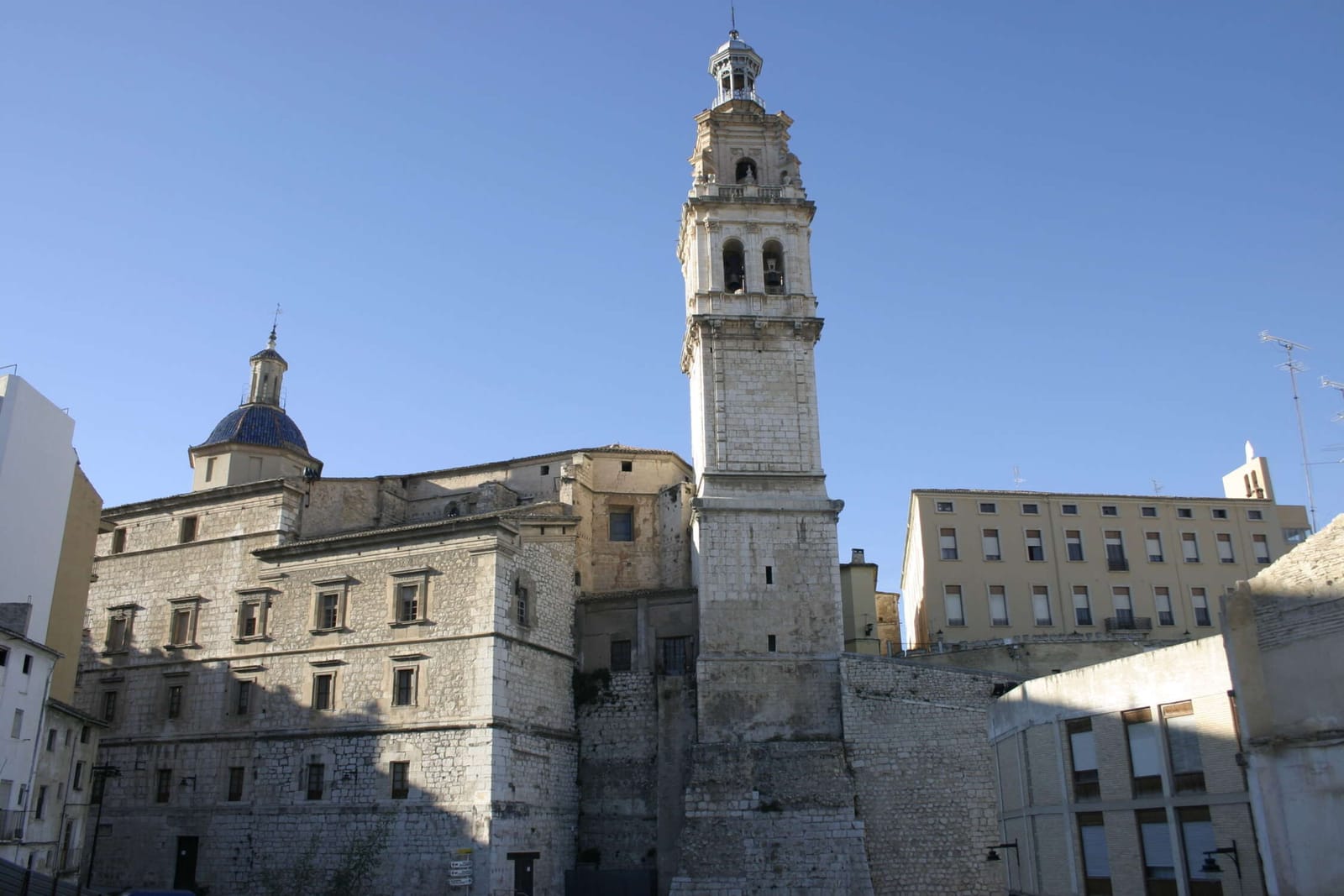
Santa Maria is the great church of the Vila and, together with its bell tower, the symbol of Ontinyent. It stands where a first church was built after the Christian conquest, probably on the site of the old mosque.
History
The core of the building dates from the 14th to 16th centuries. In the mid-15th century it was given a Latin-cross plan, and the major rebuilding of 1518-1530 was the work of Benet Oger, a master builder from Lyon: the two vaults at the west end copy the design of those in Valencia's Silk Exchange (Llotja), resting on spiral pillars. The Renaissance doorway (around 1535) is one of the finest of the early Valencian Renaissance, and the side chapels (around 1540) are by the stonemason Joan de Batea.
A 19th-century Neoclassical makeover hid the vaults and Gothic pillars; restoration work in the late 1970s uncovered them again.
What to see
- The chapel of the Purísima (1662-1692), home to the silver image of the town's patron saint.
- The tomb of Llop Llopis de Vaello, son of one of the knights who shared out Ontinyent's lands in 1250, above one of the doors.
- The 15th-century Annunciation panel, oil paintings by Josep Segrelles, a 17th-century Florentine font and the Holy Sepulchre and Soledad sculptures by Mariano Benlliure (1943-1944).
- The crypt beneath the presbytery, where priests were buried.
The bell tower
Begun in 1689, it stands over 71 metres high: the tallest in the Valencia region. The 1748 earthquake damaged its top, and a lightning strike in 1859 meant the crown had to be rebuilt; since around 1880 it has been made of wrought iron. It holds one of the oldest bells in the district, the clock bell known as Rauxa i Foc (1563).
Visiting
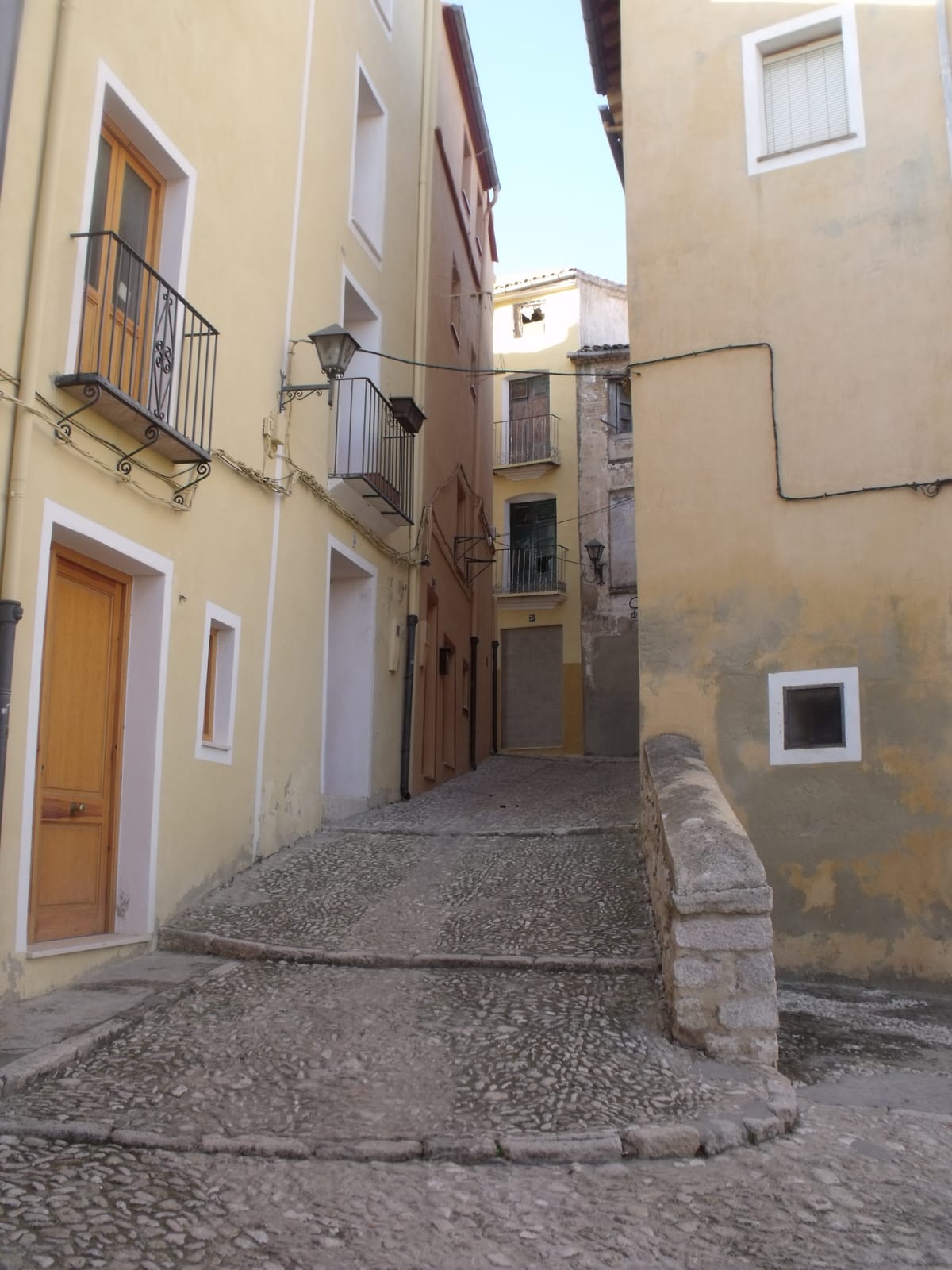
- The church is in La Vila old town and is part of the old town walk.
- Climbing the tower: guided visits on Sunday mornings, with views over the whole Vall d'Albaida and the Mariola range. Information: Colla de Campaners, 626 233 271.
Source: text by Vicent Terol i Reig (Ontinyent Municipal Archive), on the Ontinyent Tourism website.