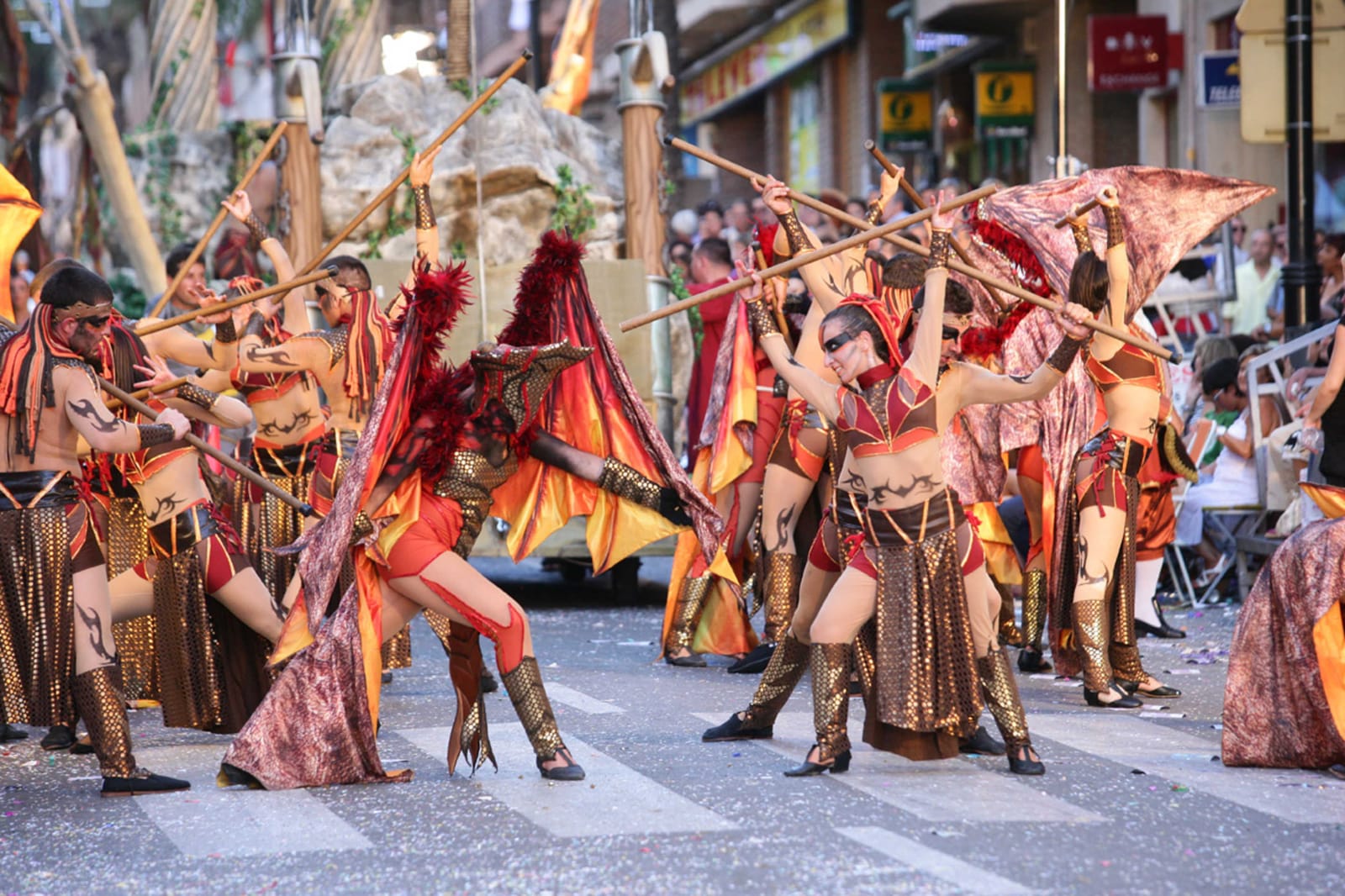
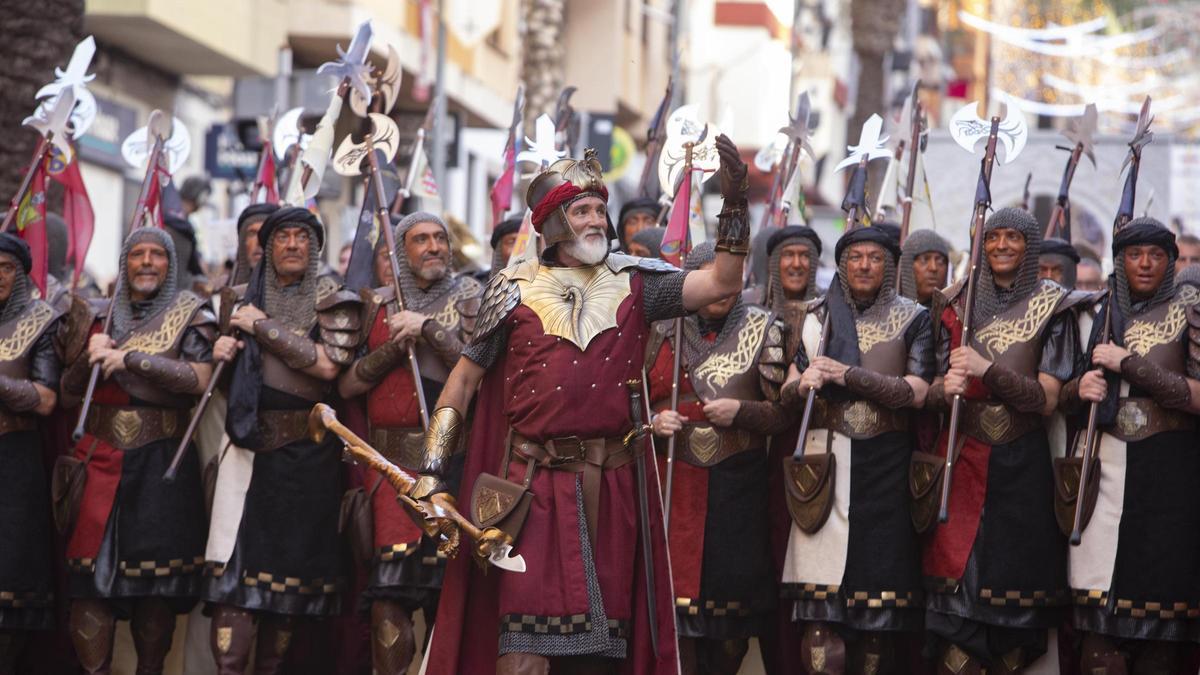
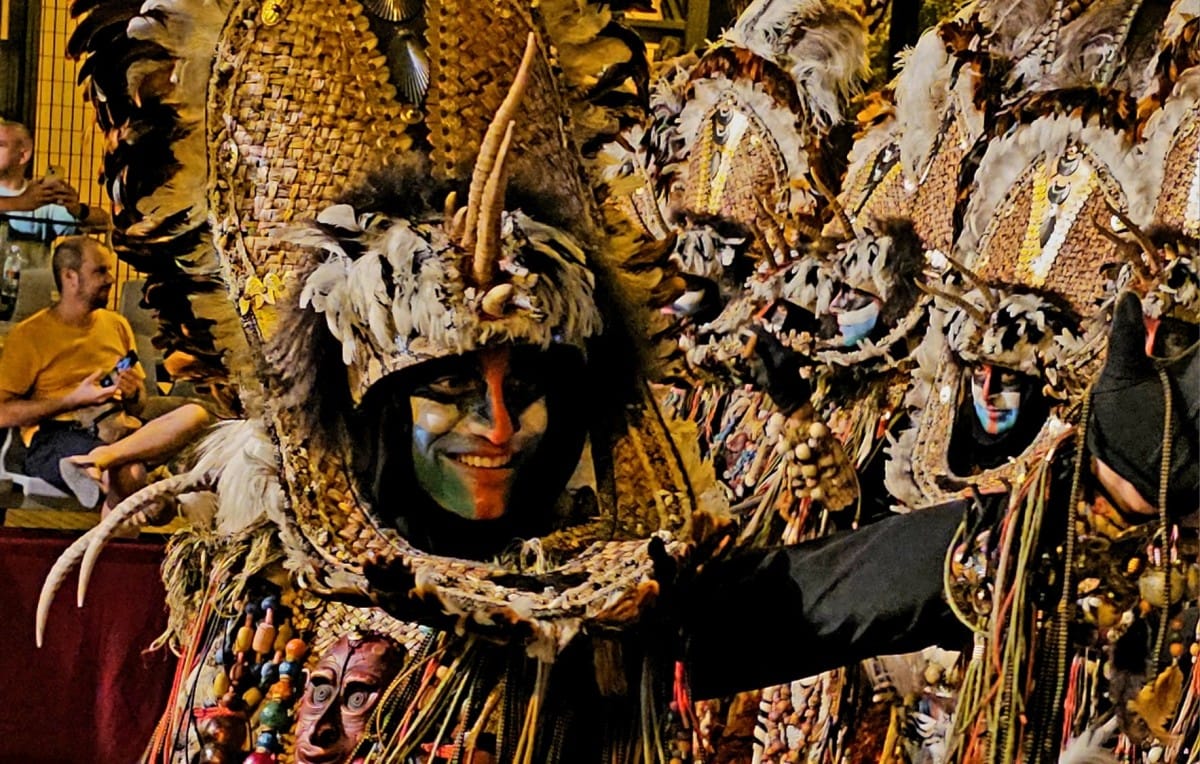
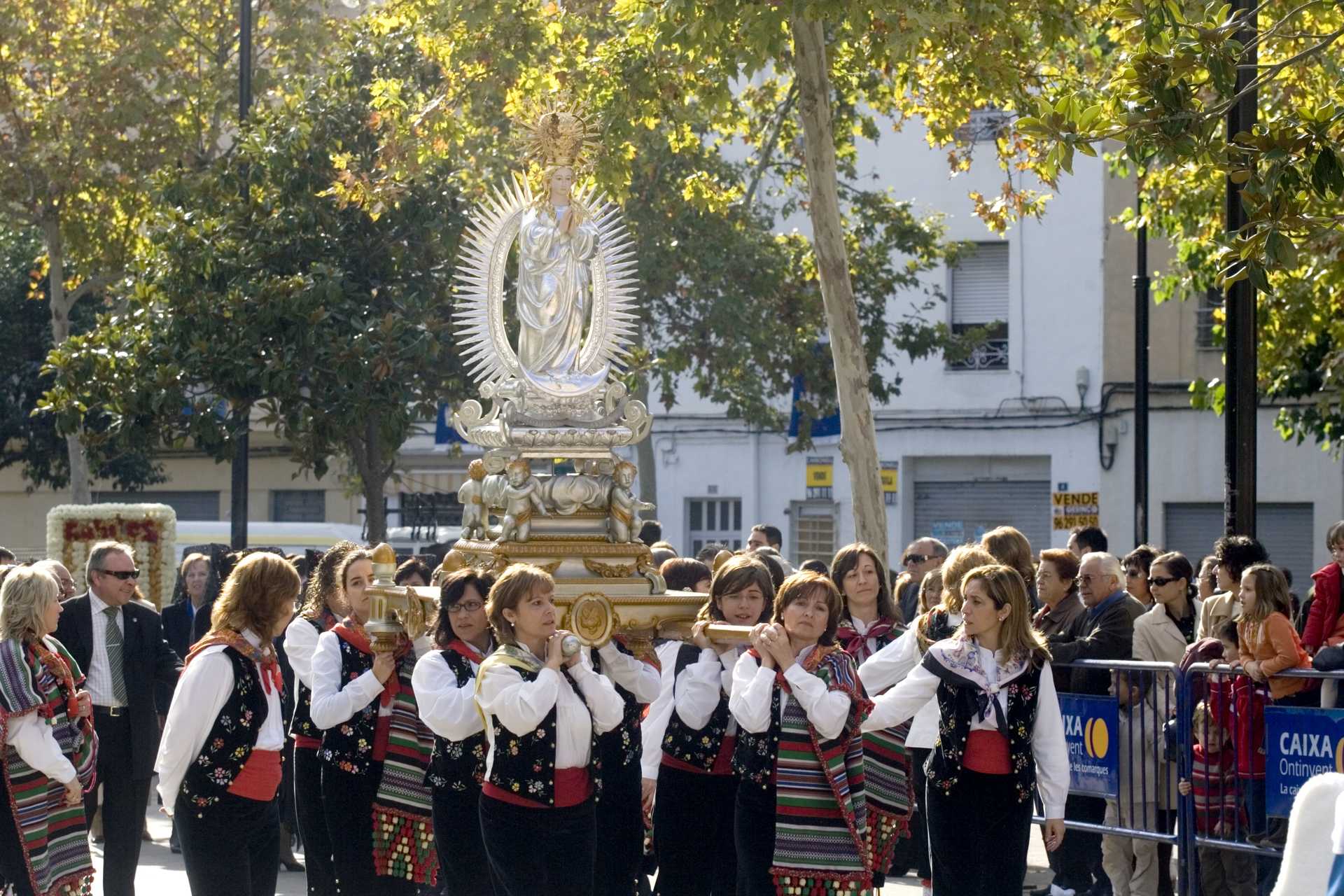
Corpus Christi was the grandest festival of Baroque Ontinyent. The town council showed off the power of the royal town by sponsoring floats, dances, theatre and parades such as the historic Entrada del Rei Redoles, and the trade guilds added dances of their own. That splendour declined in the 1920s and 1930s, but since 1981 it has been gradually revived.
The dances
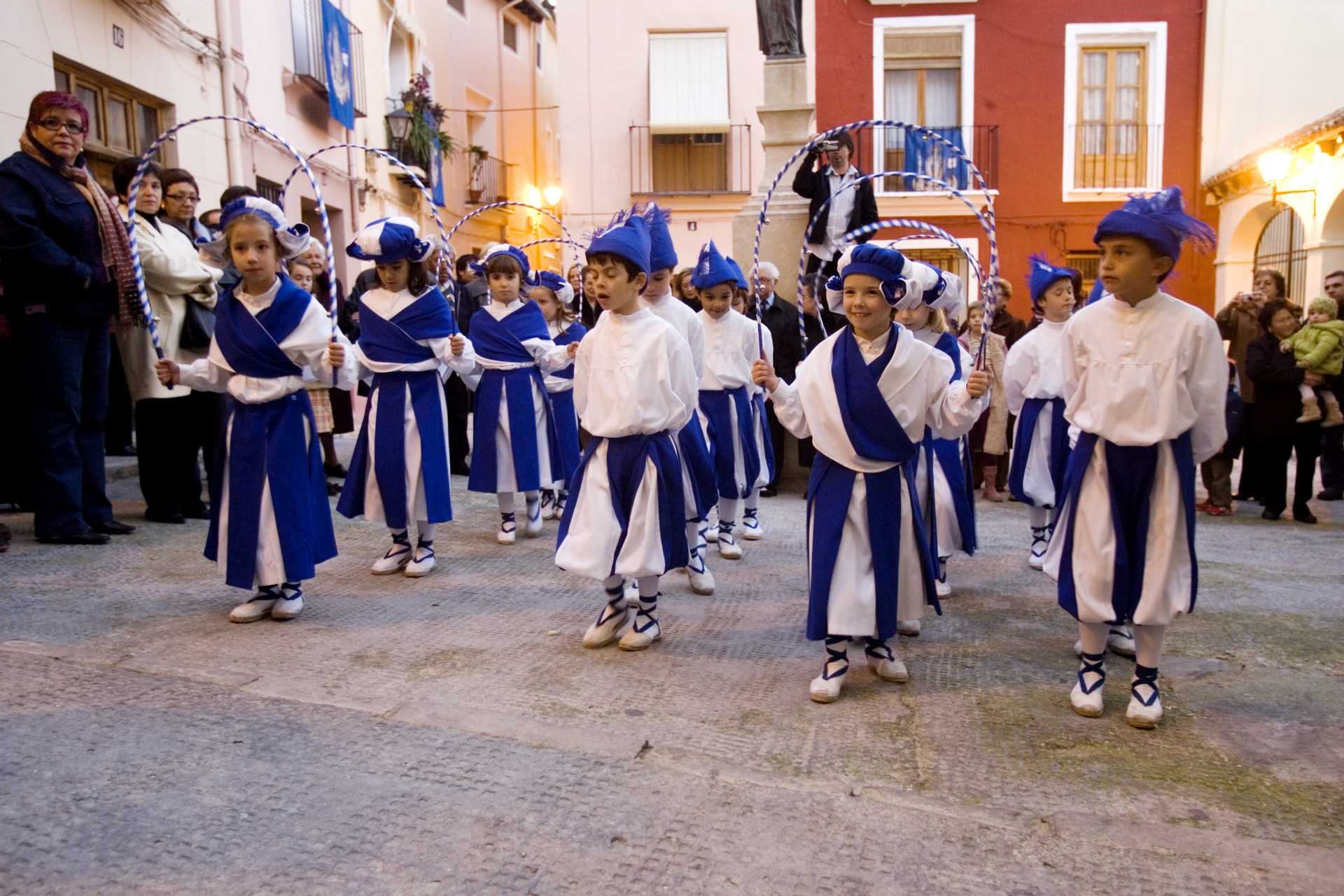
Today the procession features five dances, played on drum and dolçaina (shawm). They include the Ball dels Cavallets (hobby-horse dance), which recreates the fight of Ontinyent's old militias against Barbary pirates, and the Ball de la Veta (ribbon dance), in which dancers weave ribbons around a pole topped with a ball of carnations in the colours of the Valencian flag.
The Gegants i Cabets
The town's most symbolic dances are those of the Gegants i Cabets (giants and big-heads), a tradition dating back to the 17th century.
- The giants are three couples representing the three cultures of the old royal town and the three ages of man: the Christian Kings, the Moorish Kings (els Auelos) and, since 2006, the Jewish Kings.
- The big-heads include figures such as the King of the Cabets, the Tinyós and the Two-faced Man. Tradition says you run ahead of them shouting "Orelluts!" ("Big ears!").
They lead the Corpus and Puríssima processions. During the Corpus procession, residents set up street altars for the adoration of the Eucharist.