🗓️ Last reviewed: October 2026
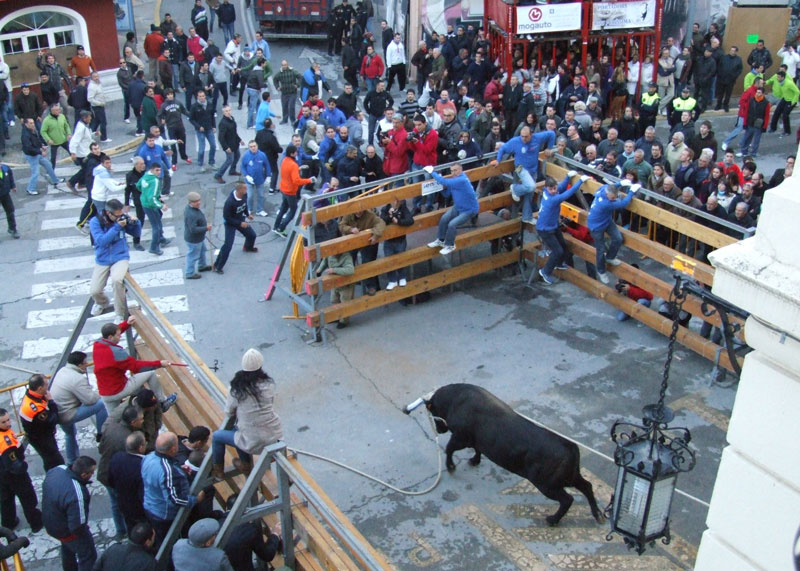
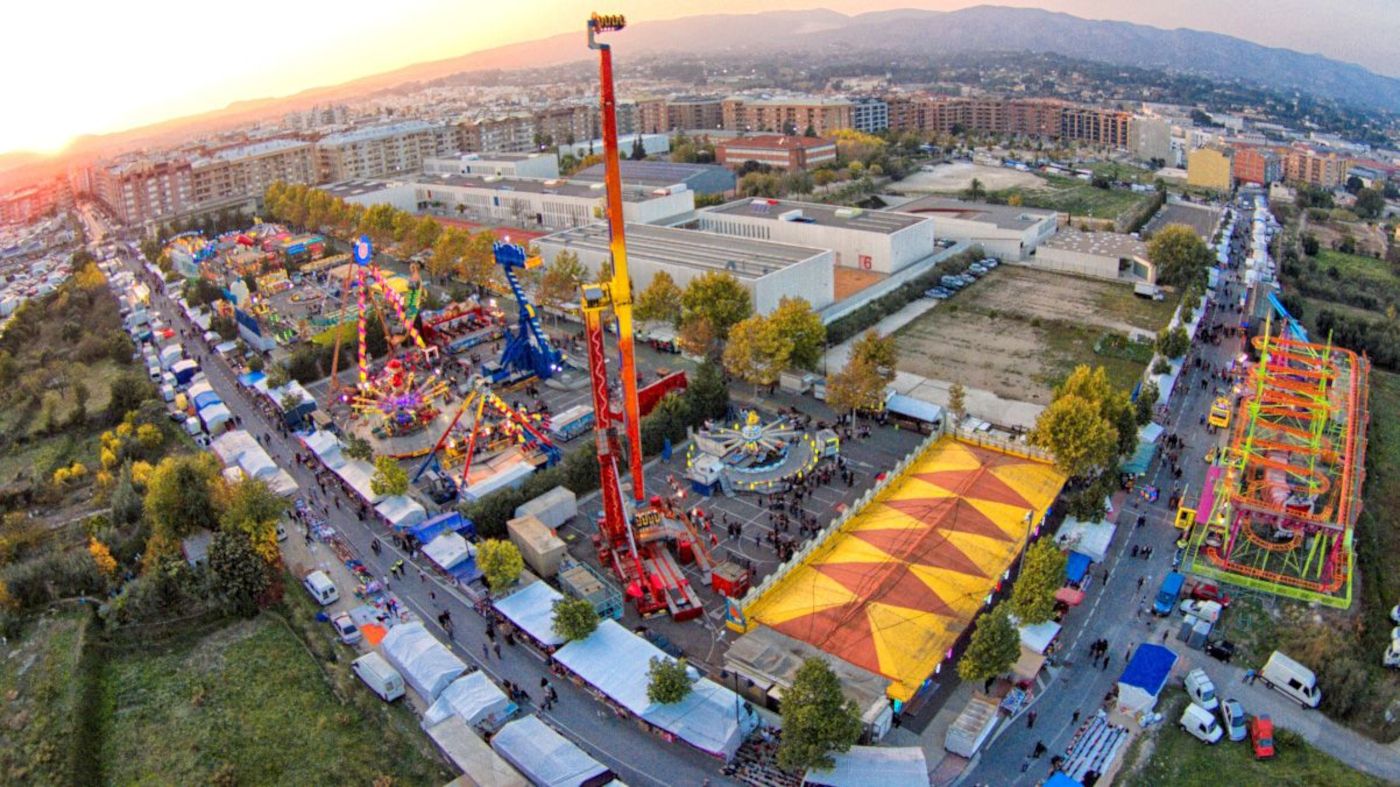
Nobody in Ontinyent says "the Bou en Corda". We just say el Bou, "the Bull": going to the Bou, Bou Saturday, see you at the Bou. It is three bulls that, tied to a long rope and with their horns capped, run for two afternoons through the streets between the Cantereria and the Plaça Major. They are part of the Puríssima Festival, the town's main festival.
But for a lot of people here, the Bou is above all something else:
There are people who can go months without seeing each other and who, when Bou Saturday comes round, know exactly where they will meet.
2026 edition: Saturday 28 and Sunday 29 November · Times and route ↓
Bou Saturday
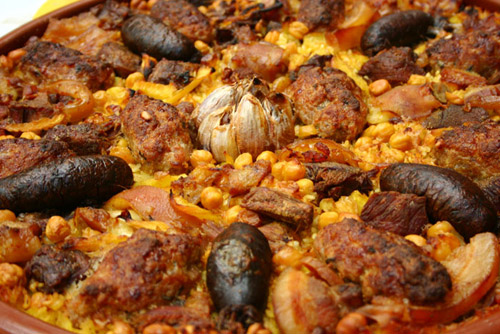
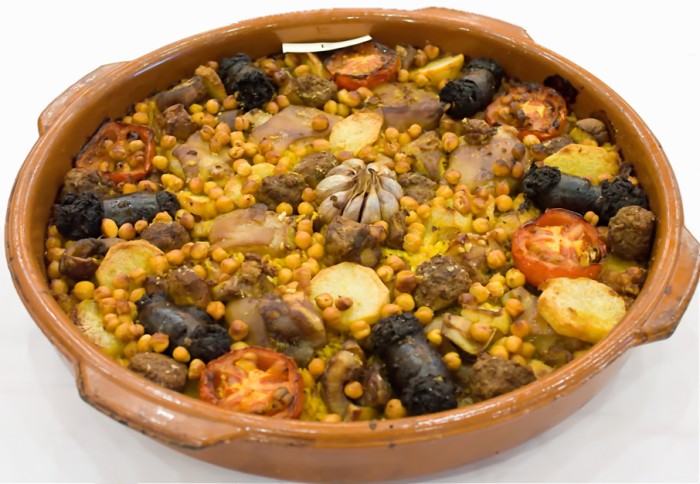
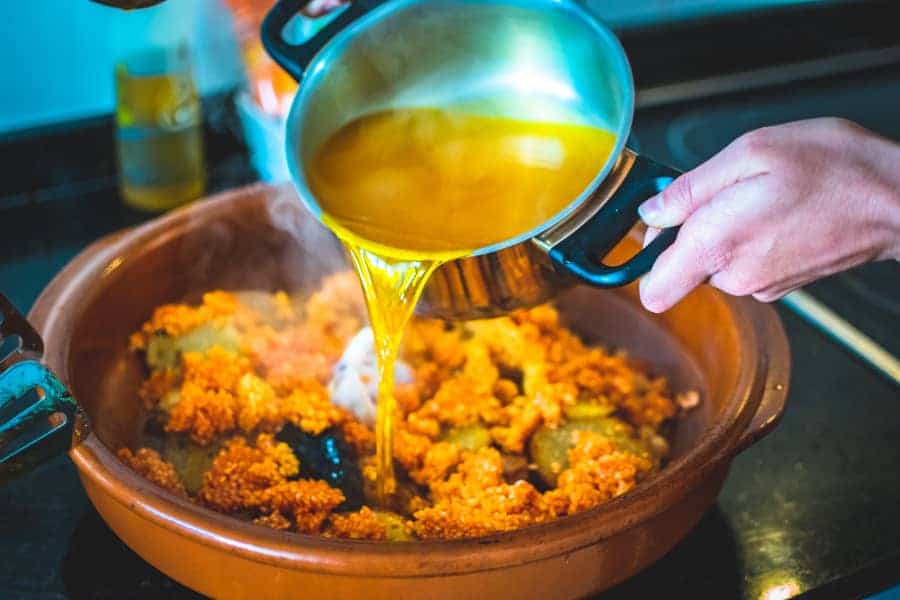
Saturday starts around midday. Groups of friends meet for the first beer, and then comes what many people see as inseparable from the day: the cassola, baked rice. That day it is easy to find in Ontinyent's bars and set menus. Some people put it plainly: without the cassola, it wouldn't be the Bou.
Groups of lifelong friends have been meeting on that same Saturday for decades. WhatsApp groups that stay almost silent all year wake up again as the date gets close. People who live elsewhere come back specially. Friends who barely cross paths during the year don't need to ask where everyone will be.
It is also common to bring friends from outside to see the Bou. Lifelong Ontinyent friends mix with the ones people have made later, away from the town. Many of those guests end up coming back year after year, and months ahead they are already asking when it is.
After lunch, everyone heads down to the Bou. On Saturday there are three runs one after another through the afternoon. Some people remember that, when the first bull used to run at three, it almost ran on its own: the groups of friends were still at the table. When each run ends, people go back to their usual spots for a drink, a chat and to find whoever they haven't seen yet. Every group has its usual spots.
When the bulls are done, Saturday isn't. Much of the atmosphere gathers around the Plaça de Baix and in front of the Societat de Festers, where a band usually plays. Then come dinner, more reunions and the night, and each group carries on in its own way.
Enjoying the Bou without running
Going to the Bou doesn't mean running in front of the bull. A great many people never run: they watch it go past from a safe place, behind the barriers or from the spot where their group meets every year, and carry on with their friends. The atmosphere, the cassola, the reunions and the party are the Bou too.
Every generation
All ages take part. Some groups keep meeting when their members are seventy or older. The youngest are the ones who usually get closest to the running.
The bull is respected. During the run some people get close, touch it or play with its movements, but there is a line nobody crosses: it is never hit, mistreated or humiliated. It is a code the crowd itself knows and enforces.
Sunday: l'Ofrena and the Bou
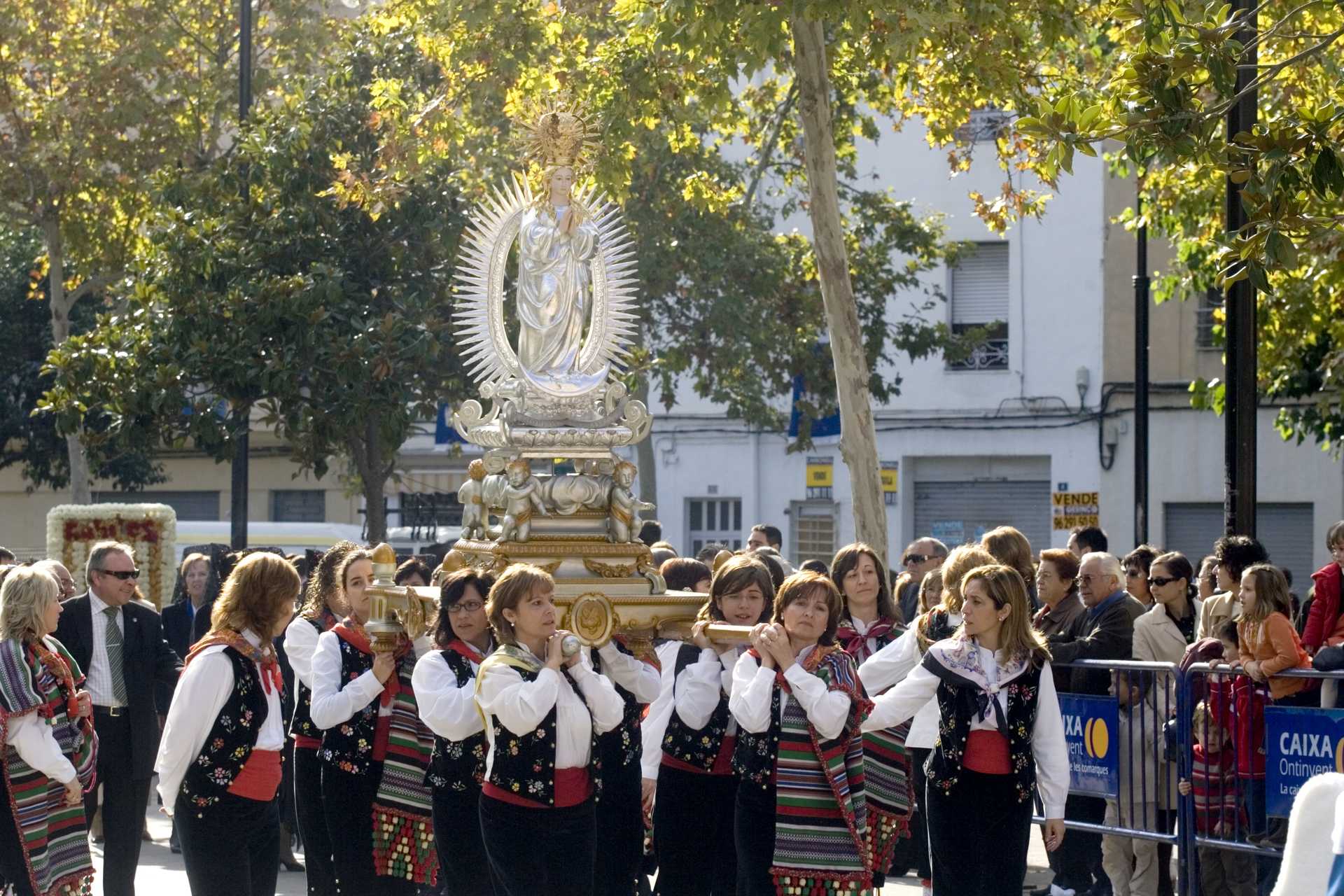
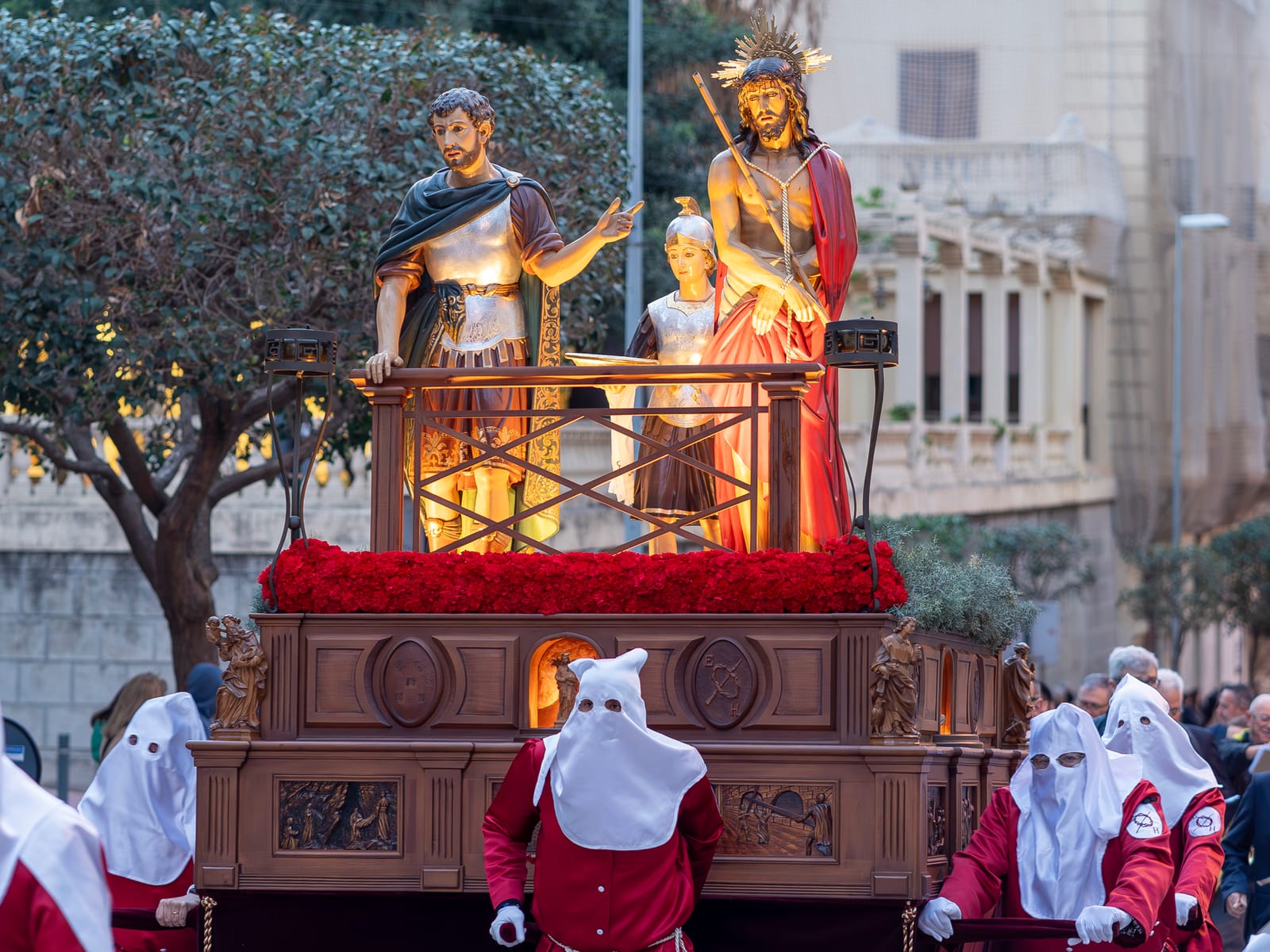
Sunday has a different rhythm. In the morning, the Ofrena, the flower offering to the Puríssima, is a reminder that the Bou is part of her festival. In the afternoon the same three bulls from Saturday run again, at four, five and six. It has been done this way for years, precisely so that the Ofrena and the Bou wouldn't overlap.
It is usually a more family-oriented day. It isn't a lesser Saturday: it is another way of living the Bou.
If it's your first time
You don't need to run in front of the bull to enjoy the festival. You can watch it go past from a safe place, behind the barriers, and soak up the atmosphere all afternoon. Always respect the route and the safety instructions. And if you can go to the Bou with someone from Ontinyent, even better: it is a festival that makes much more sense when someone shows it to you from the inside.
Why is it a bou en corda and also a bou embolat?
Because it is both at once.
- It is en corda ("on a rope") because the bull is tied to a long rope, the traditional one used for the Bou. It is held by the Portadors, who use it to guide the bull through the streets. When there is a mishap or a tricky situation, they are also the ones who try to step in to sort it out or move the bull away from the problem.
- It is embolat because the tips of its horns are covered with leather balls, which protect against the most serious injuries.
In Ontinyent, bou embolat does not mean a bull with fire: the balls are made of leather and are there for protection.
How it works
- Friday afternoon, l'Embolà. The bull is usually capped in front of the old town hall (Ajuntament vell) in the Plaça Major, where the frame for doing it is set up. From there it is run to the corral, where it stays until the next day.
- Saturday. In the morning, a young heifer (vaquilla), mainly for the youngest. In the afternoon, the three bulls run one after another, in three consecutive runs.
- Sunday. In the morning, the Ofrena de flors to the Puríssima. In the afternoon, the same three bulls run again, usually at 16:00, 17:00 and 18:00.
The horns being capped is not the same thing as l'Embolà: l'Embolà is the specific Friday event when the balls are fitted.
Route
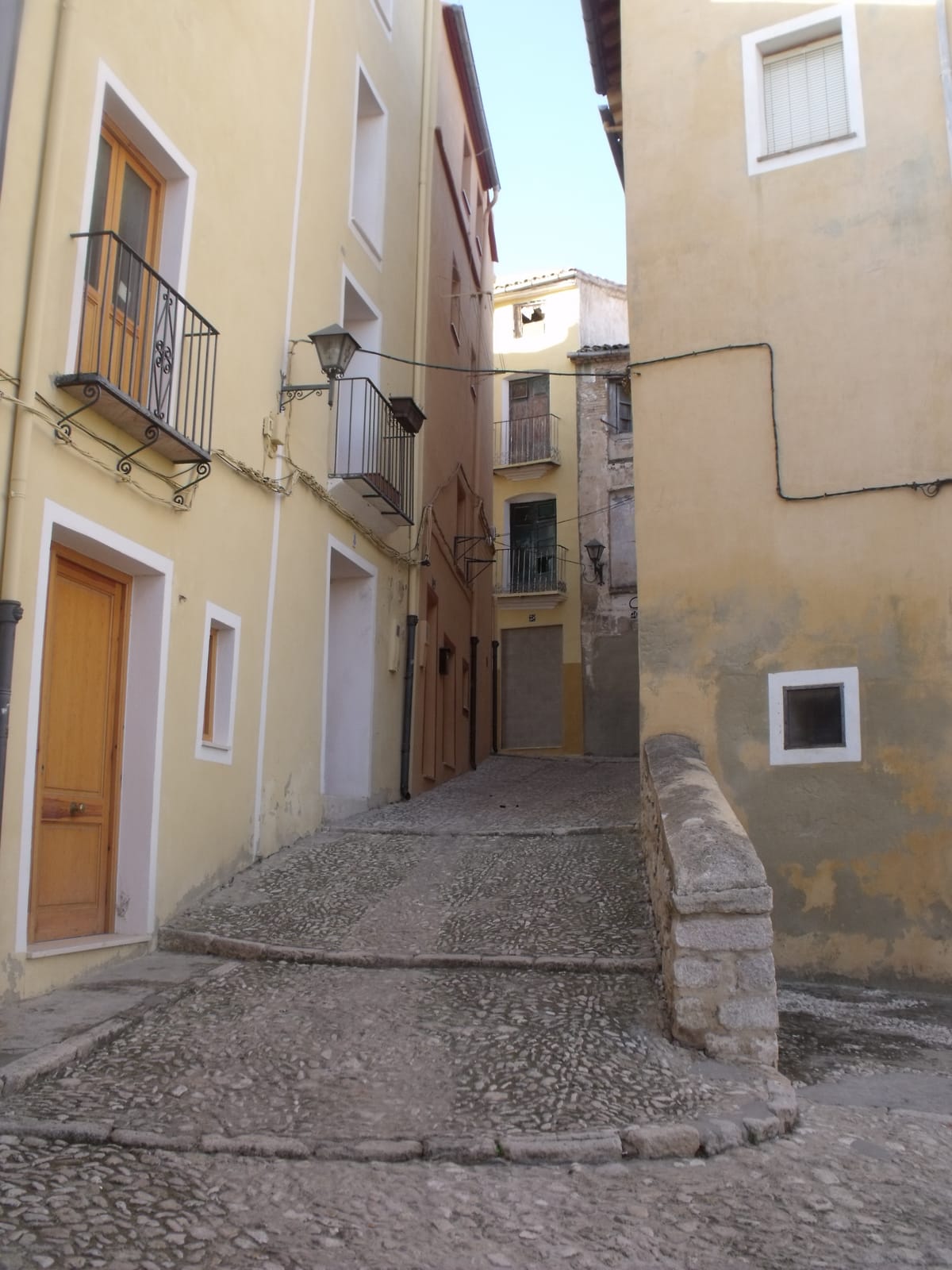
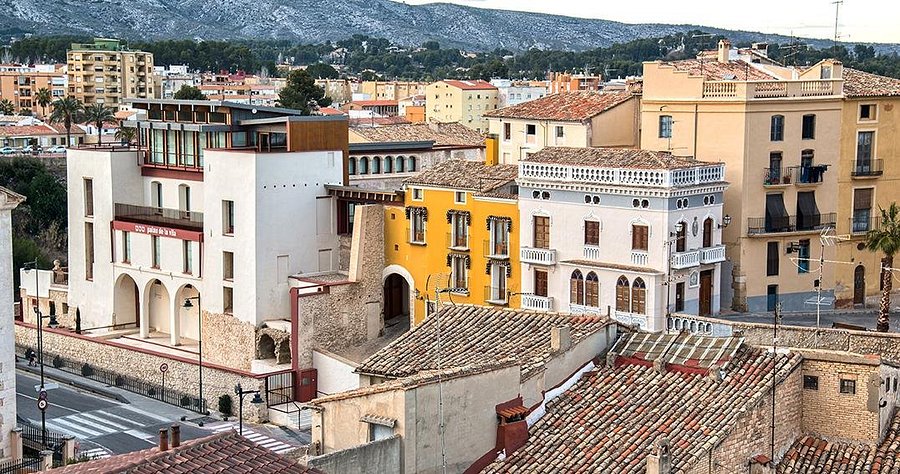
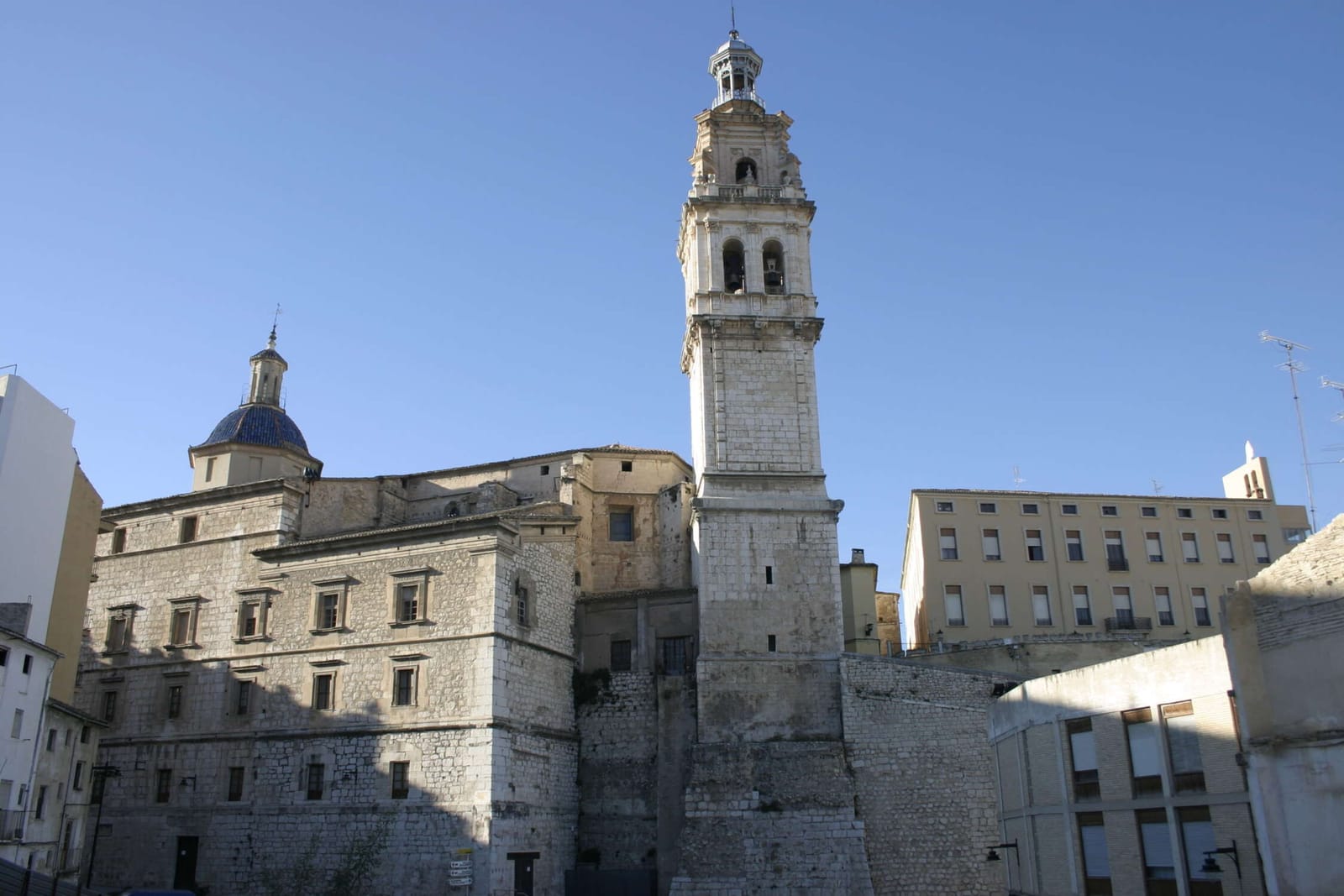
The landmarks everyone knows are the Cantereria, the Plaça de Baix and the area around the Ajuntament (town hall). From there, the Portadors may lead the bull up some of the streets of La Vila, the old town. Not every bull takes the same way through those streets, but some end up going up into La Vila, and in Ontinyent it is felt almost as an unwritten obligation that the Bou should go in.
According to the Associació de la Puríssima's 2025 programme, the route was: Camí dels Carros, Cantereria, Pont Vell, Plaça de Baix, Plaça Major, Sant Jaume, Neus, Magdalena, Roses and Trinitat, and back the same way. For 2026, the town council has announced the Camí dels Carros, the Cantereria, the Pont Vell, the Plaça de Baix, the town hall square and some streets of La Vila. The full route will be published with the official programme.
Safety and children
- If you aren't running, watch from behind the barriers and in a safe place.
- The leather balls reduce the risk of horn injuries, but they don't remove the danger: it is still a very heavy, powerful animal.
- You can bring children, especially on Sunday, always behind the barriers and in a safe area.
- The bull is respected: it is never hit, mistreated or humiliated.
2026 edition
- Embolà: Friday afternoon, in front of the Ajuntament vell. Date and time to be confirmed in the official programme.
- Vaquilla: Saturday 28 November, in the morning. Time to be confirmed in the official programme.
- Bou (Saturday): Saturday 28 November, three consecutive runs in the afternoon. Times to be confirmed in the official programme.
- Ofrena de flors: Sunday 29 November, in the morning. Time to be confirmed in the official programme.
- Bou (Sunday): Sunday 29 November, usually at 16:00, 17:00 and 18:00. To be confirmed in the official programme.
Sunday 29 and the general election. Sunday 29 coincides with the Spanish general election. According to the town council, speaking to Radio Ontinyent (Cadena SER, 6 October 2026), the events planned for that day go ahead, and no polling station is on the route.
Sources
- Associació de la Puríssima: Bou en Corda and 2025 programme (in Spanish).
- Cadena SER / Radio Ontinyent: "Ontinyent garantiza la celebración del Bou en Corda y la Ofrena pese a coincidir con las elecciones generales" (6 October 2026, in Spanish).
- El Periòdic d'Ontinyent: "Les eleccions del 29-N coincidixen a Ontinyent amb l'Ofrena i el Bou en Corda" (5 October 2026, in Valencian).