Old handwritten papers, skeins of wool, a pale thread across dark blue cloth and a folded blanket (illustrative image)

Ontinyent

People of Ontinyent

The story of a town told through the people who left their mark on it

📷 Illustrative image

← Ontinyent

From the 16th-century university to the laboratories of CERN, from Baroque workshops to blanket mills, Ontinyent can also be understood through the people who were born here or made the town part of their lives. This selection is not meant to be closed: it will grow as we document new lives and sources.

The early modern period

Between the 16th and 18th centuries, Ontinyent was a town of the Kingdom of Valencia, with parishes, convents and workshops. People from here made their careers in València and beyond: in university lecture halls, in sculptors' workshops, at the cathedral organ and in literature. Several of them now give their names to streets in the town.

Gaspar Guerau de Montmajor

Ontinyent, 1557 – Alcalá de Henares, 1600

Born in Ontinyent

Humanism · University

A humanist born in Ontinyent in 1557, he became a master of arts and, from 1579, professor of oratory at the Universitat de València. His time at the university was turbulent: he was expelled from his chair, readmitted in 1586 and removed again in 1590. His best-known work, the Breu descripció dels mestres, dates from 1586: a satire that the Universitat de València itself published in a modern edition in 1999. He spent his last years teaching rhetoric in Alcalá de Henares, where he died in 1600. A street in Ontinyent bears his name.

Main source: Gran Enciclopèdia Catalana ↗
Lleonard Juli Capuz

Ontinyent, 1660 – València, 1731

Born in Ontinyent

Sculpture

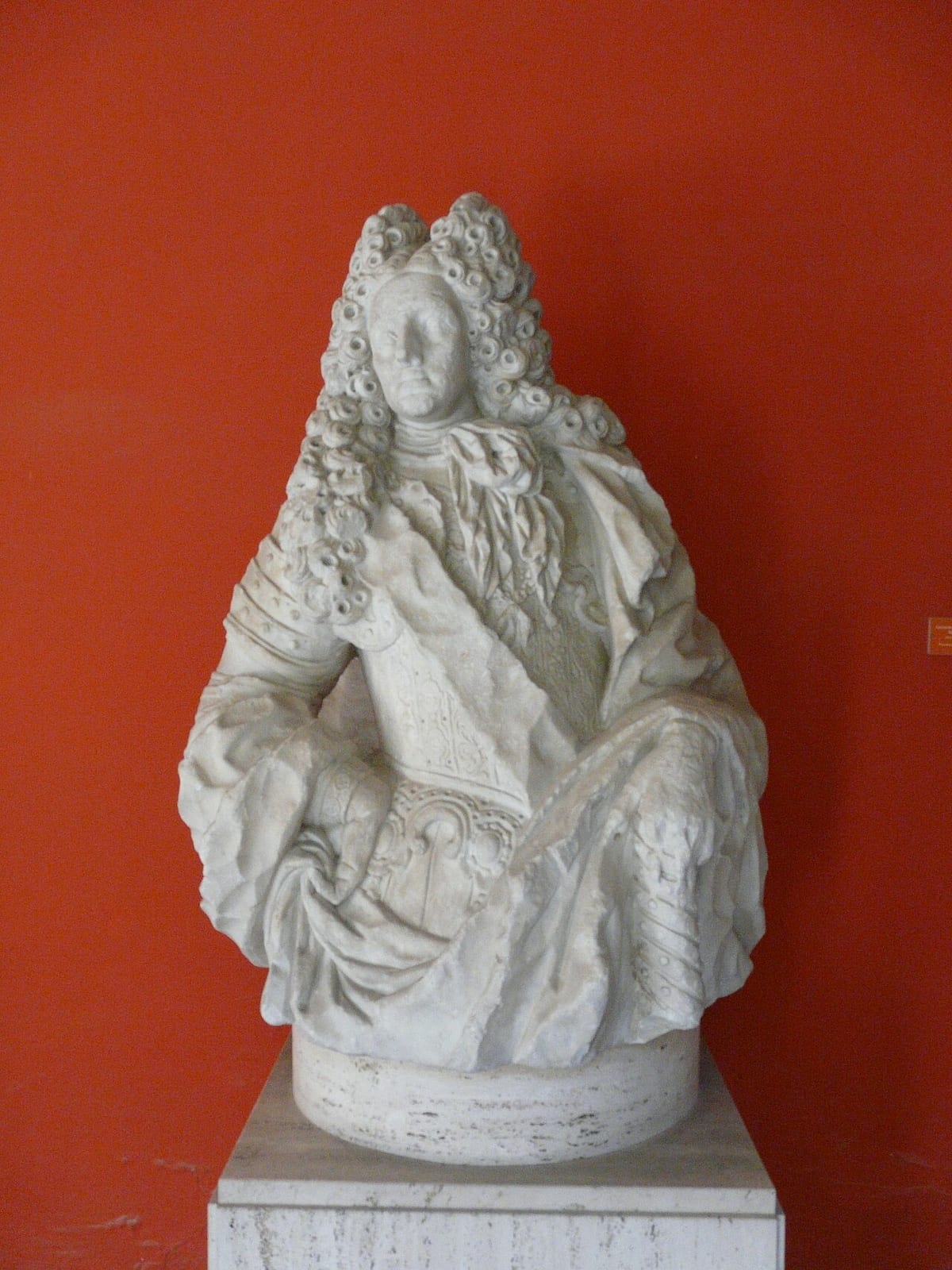
Born in Ontinyent in 1660, he was the eldest son of the Genoese sculptor Julio Capuz. From 1680 he was a master sculptor in València, where he had a long career at the height of the Baroque. The Real Academia de la Historia's biographical dictionary attributes to him, among other works, altarpieces for Burjassot (1686) and Benigànim (1690), the façade of the Carme church in València (1697), work for the Sants Joans church (1700) and, in 1714, the recumbent Christ in València Cathedral and a bust of King Philip V. He died in València in 1731. A street in Ontinyent bears his name.

Main source: Real Academia de la Historia, Diccionario Biográfico ↗

Stone bust of King Philip V carved by Lleonard Juli Capuz
Bust of Philip V (c. 1714) by Capuz. Museu de Belles Arts de València · 📷 Pere López · CC BY-SA 3.0

Vicent Rodríguez Monllor

Ontinyent, late 17th c. – València, 1760

Born in Ontinyent

Music

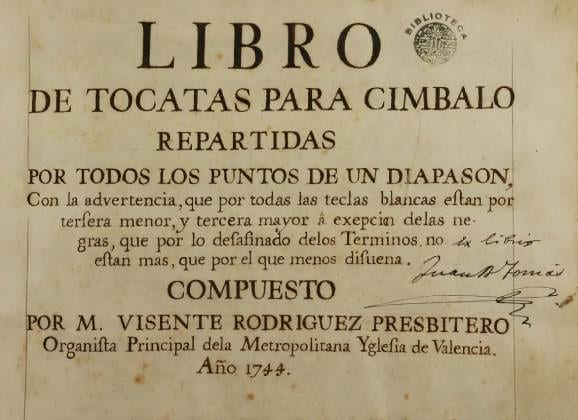
Born in Ontinyent in the late 17th century, he was one of the leading organists of 18th-century València. In 1713 he became acting organist of València Cathedral, and in 1715 he won the permanent post, succeeding Joan Baptista Cabanilles. He held it for forty-five years, until his death in València in December 1760. His surviving work includes the Libro de tocatas para címbalo (1744) as well as sacred music. A square in Ontinyent is named after him: Plaça del Músic Vicent Rodríguez.

Main source: Baker's Biographical Dictionary of Musicians (encyclopedia.com) ↗

Handwritten score page from the Libro de tocatas para címbalo
Libro de tocatas para címbalo (1744), manuscript · 📷 Orfeó Català · Public domain

Lluís Galiana i Cervera

Ontinyent, 1740 – Ontinyent, 1771

Born in Ontinyent

Literature

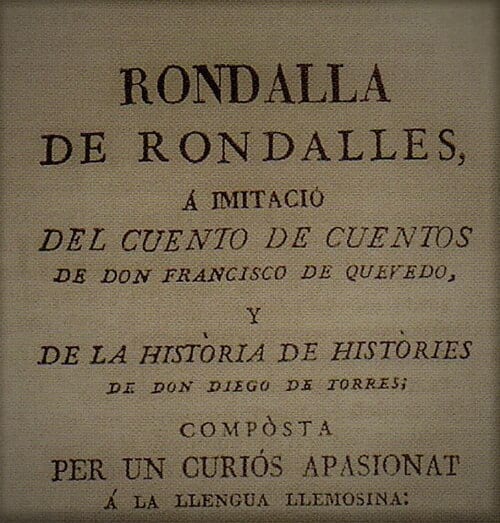
The son of the physician Antonio Galiana, he was born in Ontinyent in 1740 and joined the town's Dominican convent at a very young age. He studied in Orihuela and taught in Ontinyent and at the convent of Sant Onofre, until illness forced him to return home. He died in Ontinyent in 1771, aged just thirty. In that short time he left a notable body of work: he corresponded with the scholar Gregori Maians and in 1768 published the Rondalla de rondalles, a work in Valencian that the Gran Enciclopèdia Catalana places among the forerunners of the Renaixença, the 19th-century revival of the language. The Diputació de València reissued it in 2025. Carrer Fra Lluís Galiana in Ontinyent recalls him.

Main source: Real Academia de la Historia, Diccionario Biográfico (A. Esponera) ↗

Old title page of the book Rondalla de rondalles
Title page of the Rondalla de rondalles · 📷 CbarqueroG · CC BY-SA 4.0

The 19th century

The 19th century was a time of political upheaval, exile and new institutions. People linked to Ontinyent took part in it through music, Parliament and the courts. One of them also wrote, in 1860, the verses still recited every year in the Embassies of the Moors and Christians festival.

Josep Melcior Gomis

Ontinyent, 1791 – Paris, 1836

Born in Ontinyent

Music

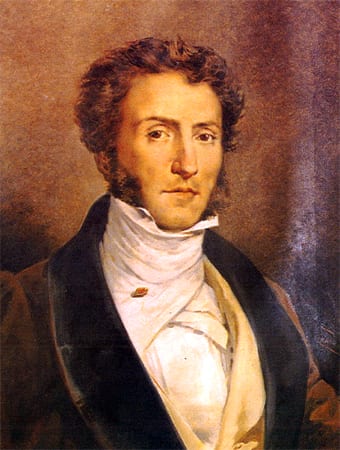
Born in Ontinyent in 1791, he trained as a choirboy at València Cathedral. He was bandmaster of an artillery regiment before settling in Madrid in 1817. His name is linked to the Himno de Riego, the anthem of the liberals of 1820. The sources credit him with its music, although some studies suggest that his contribution may have been the arrangement and orchestration. When absolutism returned he went into exile in 1823, living in Paris and London. In Paris he premiered operas such as Le diable à Séville (1831), Le revenant (1833) and Le portefaix (1835). He died there of consumption at the end of July 1836.

Legacy in Ontinyent

Sala Gomis · Conservatori Professional de Música Josep Melcior Gomis

Main source: Real Academia de la Historia, Diccionario Biográfico ↗

Painted portrait of Josep Melcior Gomis
Portrait of Gomis by Gonzalo Salvá. Conservatori de València · 📷 Gonzalo Salvá · Public domain

Luis Mayans y Enríquez de Navarra

Requena, 1805 – Madrid, 1880

Born in Requena · linked to Ontinyent through his father's family and his public life

Politics · Law

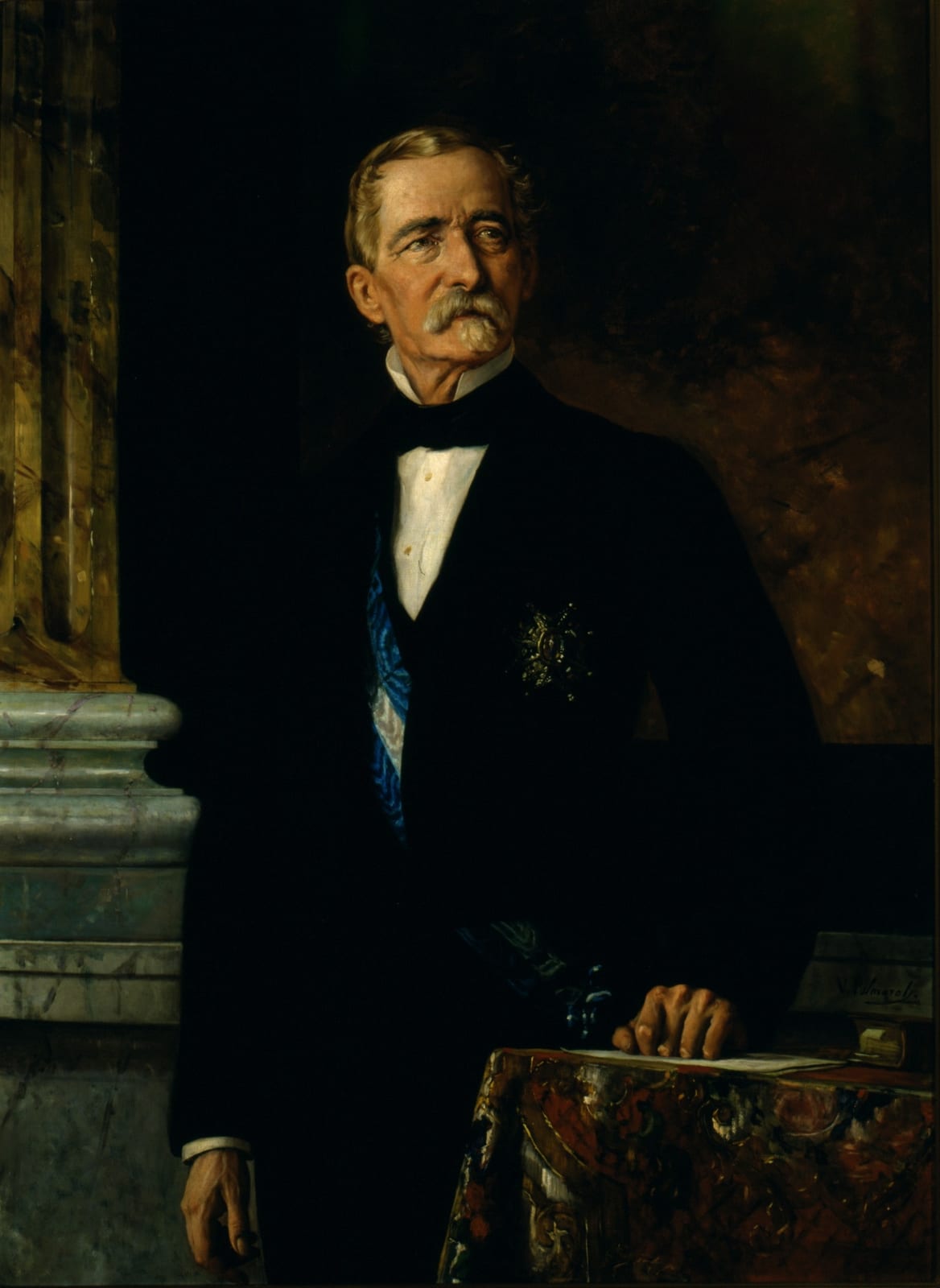
He was born not in Ontinyent but in Requena, yet his father's family was settled here and the town was the base of his public life. Around 1830 he practised as a lawyer in Ontinyent, and from 1846 he was a member of parliament for Ontinyent and Albaida. He reached the top of the politics of his time: he was President of the Congress of Deputies from 1848 to 1852 and Minister of Justice on two occasions, from 1843 to 1846 and in 1864. Years later he chaired the committee that drafted the preliminary text of the 1876 Constitution. Whenever he withdrew from politics he returned to Ontinyent, which named him a favourite son, as a plaque on the family palace in Carrer Major recalls.

Main source: Real Academia de la Historia, Diccionario Biográfico (M. Maciá) ↗

Oil portrait of Luis Mayans, seated and dressed in black
Portrait by Vicente Palmaroli (1872). Congress of Deputies · 📷 Vicente Palmaroli · Public domain

Joaquín José Cervino Ferrero

Tortosa, 1817 – La Font de la Figuera

Born in Tortosa · linked to Ontinyent since childhood

Literature · Law

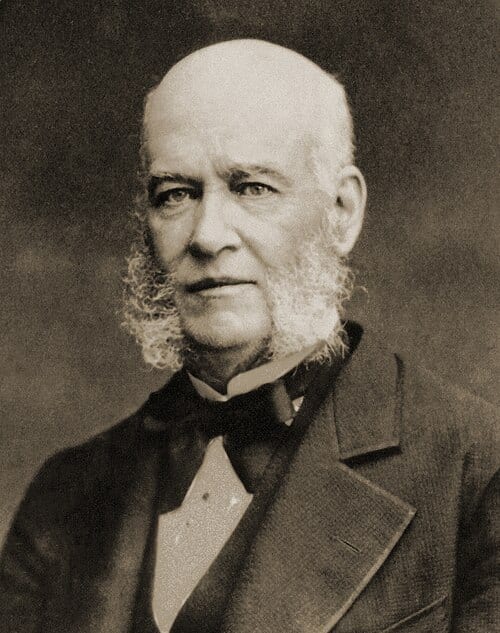
Born in Tortosa in 1817, he came to Ontinyent as a child; his mother's family was from here. A lawyer by profession, he was mayor of Ontinyent in 1843 and went on to a long judicial career that took him to the Supreme Court, where he sat as a judge from 1874 to 1883. His most living legacy in the town, however, is literary. In 1860 he wrote the 528 lines of verse of the Embassies (Ambaixades) of the Moors and Christians festival, first declaimed on 7 August that year and still recited every year in front of the castle in the Plaça Major. Today the Embassies, together with the Baixada del Crist, are listed as Intangible Cultural Heritage. In 2017, the bicentenary of his birth, Ontinyent made him an adopted son.

Legacy in Ontinyent

The Moors and Christians Embassies, declaimed every year in the Plaça Major

Main source: BOE-A-2019-2849 ↗

Old photograph of Joaquín José Cervino
Anonymous photograph, c. 1880. Original in the Museu Fester d'Ontinyent · 📷 Museu Fester d'Ontinyent · Public domain

The early 20th century

In the early decades of the 20th century, Ontinyent went through a deep industrial and social transformation, with textiles taking on a decisive role in the town's economy. These were also years of newspapers, music, cinema and sport, until the war of 1936–1939 cut many careers short. The people of this period took Ontinyent's name from the printing press to the screen, and from the boxing ring to Madrid's Teatro Real.

Juan Calvo Domènech

Ontinyent, 1892 – Madrid, 1962

Born in Ontinyent

Film

He was born in Ontinyent in 1892, although his family soon moved to Madrid. He started out in musical theatre as a baritone and spent four years touring Latin America with a company. He was a leading man, principal actor and company director before devoting himself fully to film. He made some eighty films in Spain, Italy and Mexico. He played Sancho Panza in Don Quijote de la Mancha (1947) and, above all, Fray Papilla in Marcelino, pan y vino (1955), a role that won him the award of the Círculo de Escritores Cinematográficos, the Spanish film writers' circle. The same circle honoured him again the following year for Berlanga's Calabuch. He died in Madrid in 1962.

Main source: Real Academia de la Historia, Diccionario Biográfico ↗

Rafael Martínez Valls

Ontinyent, 1895 – Barcelona, 1946

Born in Ontinyent

Music

A composer and organist born in Ontinyent in 1895. His career took him to Madrid, where he was organist and conductor at the Teatro Real, and then to Barcelona, where he was choirmaster at the parish of Sant Josep Oriol and where he died in 1946. His best-known work is the zarzuela Cançó d'amor i de guerra (1926). He never lost touch with his home town: he wrote the Himne a Ontinyent and, in 1917, a Mass in honour of the Holy Christ of Agony that is still sung at the High Mass of the Moors and Christians festival.

Legacy in Ontinyent

Carrer del Músic Martínez Valls · CEIP Martínez Valls school · his 1917 Mass, sung at the festival's High Mass

Main source: Gran Enciclopèdia de la Música ↗

José and Manuel Simó Marín, founders of Paduana

José: Ontinyent, 1879 – Paterna, 1936Manuel: Ontinyent, 1868 – 1936

Born in Ontinyent

Industry

Paduana, one of the great textile mills in Ontinyent's history, was registered as an industry in September 1918, although the company dated its foundation to 1919, its first full year of activity. It had four founding partners: the brothers José and Manuel Simó Marín, Joaquín Colomer Mergelina and José Moscardó Boluda. José, a graduate in Philosophy and Letters, was the industrialist who ran it until 1936. In the 1930s the mill employed more than a hundred workers, and from 1921 it shared part of its profits among them. Manuel, a lawyer and politician, was elected to the Spanish parliament for Valencia in 1914. Both were killed in 1936. Of the industrial complex, listed as a Bé de Rellevància Local (heritage of local significance), the Generalitat inventoried the main building, the chimney and the water tower in 2009. Two streets in Ontinyent bear their names.

Legacy in Ontinyent

José Simó Marín and Manuel Simó Marín streets · Paduana heritage inventoried as a Bé de Rellevància Local (2009)

Main source: Generalitat Valenciana, Inventari General del Patrimoni Cultural Valencià: Fàbrica La Paduana ↗

Robert Sanz i Insa

Ontinyent, 1908 – Santa Coloma de Gramenet, 1965

Born in Ontinyent

Sport

A boxer born in Ontinyent in 1908, he was part of the Spanish team at the 1928 Amsterdam Olympics. He fought in the lightweight class and on 8 August lost on points to the Italian Carlo Orlandi, who went on to win the gold medal. According to the Olympedia database, he was the first of the three athletes born in Ontinyent to have competed at the Olympic Games; the cyclist Eleuterio Mancebo and the tennis player Juan Carlos Ferrero would follow. He died in Santa Coloma de Gramenet in 1965.

Main source: Olympedia ↗

The late 20th century

After the post-war years, Ontinyent grew as an industrial town, known for decades as the city of blankets. The people of this period left their mark on archaeological research, on festival music, on the Church and on schools. Some of them, though not born here, made Ontinyent the place of their work and commitment.

Enric Pla Ballester

Ontinyent, 1922 – València, 1988

Born in Ontinyent

Archaeology

An archaeologist born in Ontinyent in 1922, he devoted his whole career to the Servei d'Investigació Prehistòrica of the Diputació de València, the research centre linked to the Museu de Prehistòria de València. He was its deputy director from 1950 and its director from 1982 until his death in 1988. For almost four decades he took part in excavating and studying Valencian sites. Some field photographs in which he appears, such as those taken at l'Ereta del Pedregal in 1942, are now kept in the museum's archive. A tribute volume was dedicated to him in 1992.

Main source: Gran Enciclopèdia Catalana ↗
José María Ferrero Pastor, «Mestre Ferrero»

Ontinyent, 1926 – 1987

Born in Ontinyent

Music

José María Ferrero Pastor, known as Mestre Ferrero, was born in Ontinyent in 1926 and devoted his life to his town's music. In 1964 he composed Chimo, the Moorish march that became the anthem of the Moors and Christians festival, played by all the bands together at the end of the bands' parade. A band conductor, in 1975 he was one of the founders of the music school from which today's Conservatori grew. He died in a road accident in 1987, and that same year the town council named him a favourite son posthumously. In 2026, the centenary of his birth, Ontinyent is celebrating Mestre Ferrero Year.

Legacy in Ontinyent

Chimo, at the bands' parade · Mestre Ferrero square and park

Main source: Ajuntament d'Ontinyent ↗

Teodor Úbeda Gramage

Ontinyent, 1931 – Palma, 2003

Born in Ontinyent

Religion

Born in Ontinyent in 1931 and ordained a priest in 1955, he was appointed auxiliary bishop of Ibiza in 1970 and bishop of Majorca in 1973. He led the diocese for three decades, until his death in Palma in 2003. In 2002 he received the Gold Medal of the Balearic Islands. His home town had named him a favourite son in 1995.

Main source: Catholic-Hierarchy ↗

Empar Granell i Tormos

Borriana, 1945 – Ontinyent, 2010

Born in Borriana · a teacher in Ontinyent for almost forty years

Education

Born in Borriana in 1945, Empar Granell came to Ontinyent as a teacher and worked here for almost forty years, from 1968 to 2007, at the Lluís Vives school. She was one of the driving forces behind teaching in Valencian in the area: in 1987 she co-founded the Coordinadora de la Vall d'Albaida per la Defensa i Ús del Valencià and, in 1990, Escola Valenciana. She received the Joan Baptista Basset award (2007) and the Fundació Carulla's Civic Action Award (2008). She died in Ontinyent in 2010.

Legacy in Ontinyent

Escola Oficial d'Idiomes de la Vall d'Albaida–Empar Granell (official language school)

Main source: Gran Enciclopèdia Catalana ↗
José Niñerola Company

Died in 2010

Linked to Ontinyent

Industry

José Niñerola Company was a businessman closely linked to Ontinyent who devoted much of his work to organising the textile and business sector of the area. He chaired ATEVAL-Vall d'Albaida and, according to the town council, was a founder and the first president of COEVAL, the Vall d'Albaida business confederation, created in late 1996. The town council highlights his involvement in bringing the Universitat de València to Ontinyent and in the choice of the town as home of the Museu del Tèxtil de la Comunitat Valenciana. At the 2023 tribute ceremony, the mayor stated that the idea for the museum grew out of Niñerola's proposals. He died in 2010.

Legacy in Ontinyent

Plaça de José Niñerola Company

In 2022 the town council approved naming the square at the entrance to the Museu del Tèxtil de la Comunitat Valenciana after him, following a proposal by ATEVAL and COEVAL. The square was inaugurated under this name in March 2023.

Main source: Ajuntament d'Ontinyent ↗

Ontinyent today

Today there are people from Ontinyent, by birth or by bond, in elite sport, international dance, universities and major research laboratories. Their careers are still unfolding. Here we include only their public and professional activity, and the recognition the town has given them.

Eleuterio Mancebo

Ontinyent, 1968

Born in Ontinyent

Sport

A cyclist born in Ontinyent in 1968 who came up through the Club Ciclista Ontinyent. He competed at the Barcelona 1992 Olympics as part of the Spanish team time trial squad, which finished fifth. According to the Olympedia database, he is one of the three athletes born in Ontinyent to have competed at the Olympic Games, together with the boxer Robert Sanz and the tennis player Juan Carlos Ferrero.

Main source: Olympedia ↗

Juan Carlos Ferrero

Ontinyent, 1980

Born in Ontinyent

Sport

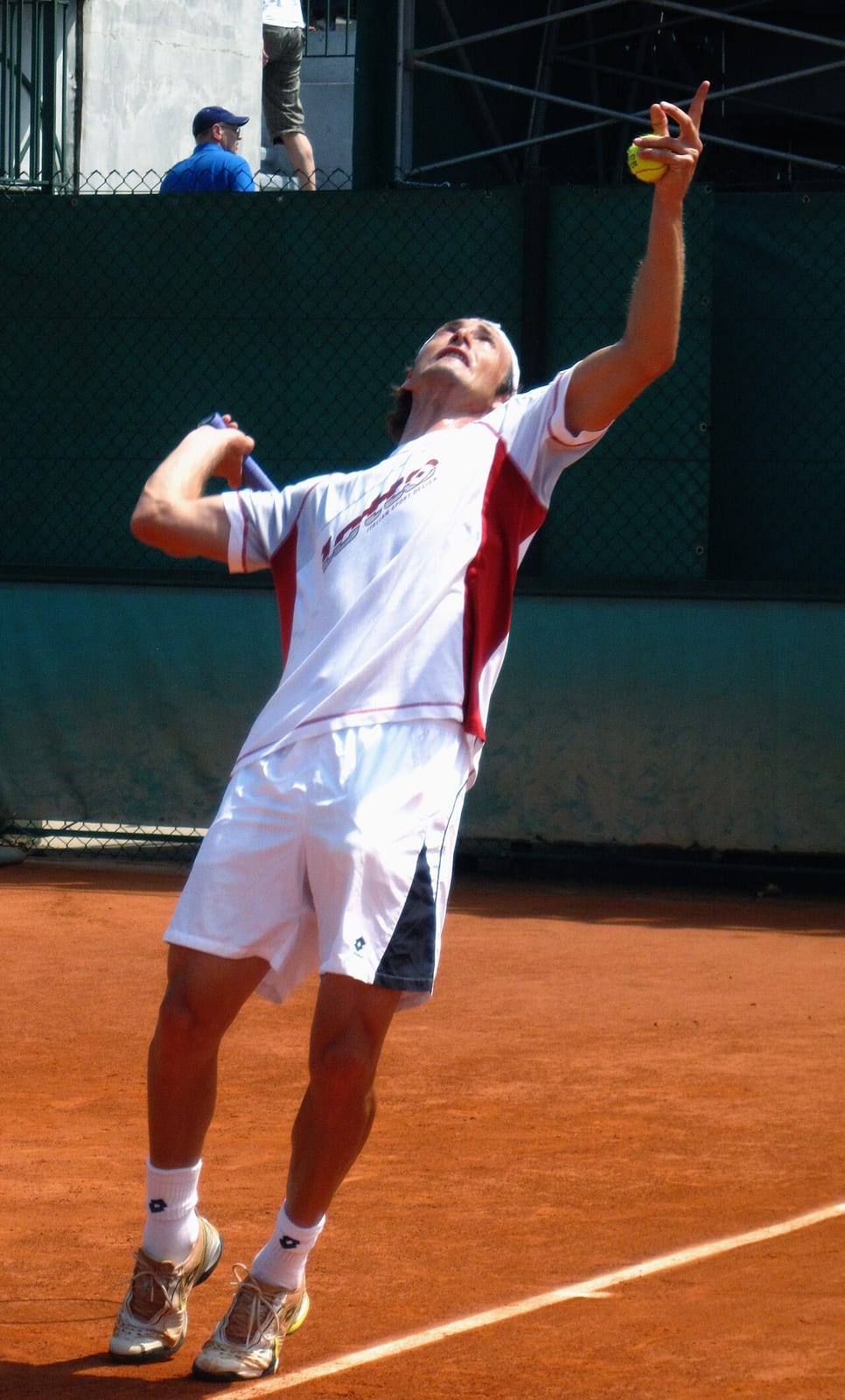
Born in Ontinyent in 1980, Juan Carlos Ferrero won Roland Garros in 2003 and on 8 September that year reached number 1 in the ATP world rankings. Over his career he won 16 ATP titles and two Davis Cups with Spain, in 2000 and 2004, and competed at the Sydney 2000 and Athens 2004 Olympics. After retiring in 2012 he turned to coaching and was Carlos Alcaraz's coach until 2025. Ontinyent awarded him the town's Gold Medal (Medalla d'Or de la Ciutat) in 2001.

Legacy in Ontinyent

Juan Carlos Ferrero park (el Llombo)

Main source: ATP Tour ↗

Juan Carlos Ferrero serving on a clay court at Roland Garros
Juan Carlos Ferrero at Roland Garros, 2009 · 📷 Charlie Cowins · CC BY 2.0

Marcos Morau

Ontinyent, 1982

Born in Ontinyent

Dance

Marcos Morau, the stage name of Marcos Mora Ureña, was born in Ontinyent in 1982. A choreographer and stage director, he has developed with his company, La Veronal, what the jury of Spain's 2013 National Dance Award described as a choreographic signature of his own. His work has reached major international stages: in 2021 he presented Sonoma at the Festival d'Avignon and in 2025 he took part in the Venice Biennale. In 2025 he received the Gold Medal for Merit in the Fine Arts, gave the opening address of the Moors and Christians festival and was awarded the town's Gold Medal (Medalla d'Or de la Ciutat) by the council.

Main source: BOE-A-2014-1120, Premio Nacional de Danza 2013 ↗

Marcos Morau at the Reims Scènes d'Europe festival
Marcos Morau at the Reims Scènes d'Europe festival, 2019 · 📷 Gérald Garitan · CC BY-SA 4.0

José R. Penadés Casanova

Agullent

Born in Agullent · linked to Ontinyent, where he has lived for much of his life

Science

José Rafael Penadés was born in Agullent, a neighbouring municipality, and has lived in Ontinyent for much of his life. A doctor of veterinary medicine, he began his scientific career at the CEU Cardenal Herrera University in València. He then worked as a researcher at Spain's CSIC and as a professor at the University of Glasgow before joining Imperial College London, where he heads the Centre for Bacterial Resistance Biology. He studies how genes are transferred between bacteria, a key process for understanding the spread of antibiotic resistance. In 2018 he described a new transfer pathway, 'lateral transduction'. In 2024 he was elected a Fellow of the Royal Society and Ontinyent awarded him one of its 9 d'Octubre distinctions.

Main source: Imperial College London ↗

Juan Luis Gandía Cabedo

Ontinyent, 1965

Born in Ontinyent

University

Juan Luis Gandía was born in Ontinyent in 1965 and lived in the town until he left to study. Professor of Financial Economics and Accounting at the Universitat de València, he was a vice-rector from 2014 to 2019. In March 2026 he won the election for rector and took office in April. He is the first person from Ontinyent to lead the Universitat de València, which has one of its campuses in the town. That same year the town council awarded him one of its 9 d'Octubre distinctions.

Main source: Universitat de València ↗

Emma Torró Pastor

Ontinyent, 1981

Born in Ontinyent

Science

Emma Torró was born in Ontinyent in 1981 and went to school at CEIP Vicent Gironés, IES L'Estació and the Conservatori Josep Melcior Gomis. After a degree in Physics at the Universitat de València, she earned her PhD at the Instituto de Física Corpuscular (IFIC) within the ATLAS collaboration, one of the major experiments at CERN's Large Hadron Collider. She worked for the University of Washington, mostly at CERN, and then returned to IFIC, where she is a tenured scientist at Spain's CSIC and the institute's deputy technical director. Her research focuses on the search for new long-lived particles. In 2022 Ontinyent awarded her one of its 9 d'Octubre distinctions.

Main source: Ajuntament d'Ontinyent ↗

Sources

These biographies are based on documentary sources: the Real Academia de la Historia's biographical dictionary, the Gran Enciclopèdia Catalana, Spain's official gazette (BOE), the Valencian cultural heritage inventory, the minutes and news of Ontinyent town council, the journal Almaig (La Nostra Terra), Olympedia, and the academic and scientific institutions of each person. Each entry gives its main source.

If you spot a mistake or know a source that could help us complete this selection, get in touch. Contact